
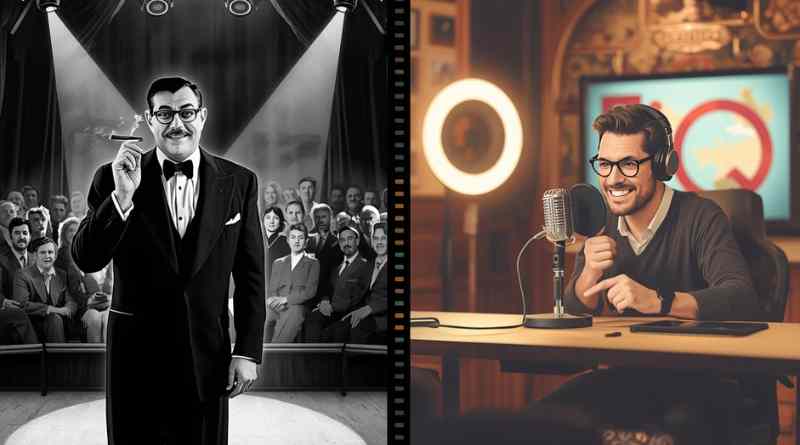
KS Fraiser Inspired by Groucho Marx: Classic Wit Meets Modern Comedy
There is a certain kind of humor that stops you mid-scroll. It does not rely on a trending sound or a flashy edit. It just says something sharp, something true, and you feel it land before you even finish reading.
That is the kind of humor KS Fraiser creates. And if you trace it back far enough, you will find a man with a painted mustache and a cigar who was doing the exact same thing nearly a century ago.
KS Fraiser inspired by Groucho Marx is not a marketing tagline. It is a real creative lineage, one that connects classic satirical comedy to the platforms and audiences of today. This article explores that connection in full: who both creators are, what makes their styles so similar, and why this blend of old wit and new media matters more than ever.
Who Is KS Fraiser?
KS Fraiser is a modern digital creator known for sharp observational humor and satirical commentary on everyday culture. His content spans social media clips, podcast appearances, and short-form video — and what ties it all together is a voice that feels both quick and considered.
He does not chase trends for the sake of going viral. Instead, he comments on them. That distinction is what separates him from most digital entertainers operating today.
His comedic style is direct, a little dry, and often catches you off guard. He says the thing you were already thinking but could not quite put into words. Audiences connect with him because his humor does not feel performed, it feels honest.
Fraiser has built a following by being consistent in one specific way: he always brings a perspective. Whether he is discussing pop culture absurdities, digital behavior, or the strange social rituals of modern life, there is always an angle that feels thought through rather than thrown together.
That quality, bringing a considered point of view to comedy, is exactly what ties him to Groucho Marx, even across nearly a hundred years of distance.
Who Was Groucho Marx? A Quick Portrait of a Comedy Legend
Julius Henry Marx, better known as Groucho, was born in New York City in 1890. Alongside his brothers Harpo, Chico, Zeppo, and Gummo, he became one of the most recognized comedic figures of the twentieth century.
But Groucho stood apart from his brothers in a specific way. While Harpo relied on physical gags and Chico played a character, Groucho used language. He turned words into precision tools. Every joke he told was built around timing, contrast, and the ability to say something absurd that was also undeniably true.
His films, including “Duck Soup” and “A Night at the Opera,” gave him a global platform. But it was his long-running television show, “You Bet Your Life,” that revealed his full range. Unscripted and conversational, the show proved he did not need a script to be brilliant, he just needed a target.
That target was almost always pretension. Groucho despised social performance. He mocked authority figures, self-important guests, and cultural institutions with equal enthusiasm. His humor always punched upward, which is why it never felt mean, it felt honest.
What makes Groucho’s style so durable is that he was not really telling jokes. He was making observations. And human behavior, which was his true subject, has not changed all that much since the 1930s.
That is the foundation that KS Fraiser builds on.
The Real Connection: How KS Fraiser Draws From Groucho’s Playbook
This is where the comparison becomes genuinely interesting. The link between KS Fraiser and Groucho Marx is not aesthetic. Fraiser does not wear a tuxedo or carry a cigar. The connection is methodological, they approach comedy the same way.
Here is how that plays out across four key techniques:
Wordplay and Double Meanings
Groucho’s most famous lines work because they contain two meanings at once. “Those are my principles, and if you don’t like them, well, I have others” is a joke about hypocrisy, but it is also a confession that lands as a punchline because of how quickly he delivers it.
Fraiser uses the same technique in a modern context. His short-form content often builds a sentence that means one thing and then pivots to reveal it meant something else entirely. The format is different, but the mechanics are identical.
Satire of Authority and Trends
Groucho was deeply suspicious of anyone who took themselves too seriously. Politicians, academics, and wealthy socialites were all fair targets. His satire worked because it exposed the gap between how powerful people presented themselves and how they actually behaved.
Fraiser does this with digital culture. He targets the same gap, between how people perform online and what they are actually doing. The subject has changed. The technique has not.
Timing and Delivery
This is the element that is hardest to teach and most immediately recognizable. Groucho knew exactly when to deliver a line. In a conversation, he would wait, sometimes let the other person think they had won, and then place the punchline with surgical accuracy.
Fraiser manages the same effect in text and video. His punchlines often come later than you expect, which makes them land harder. There is a patience to his humor that most digital content does not have.
The Outsider Perspective
Both Groucho and Fraiser position themselves as observers. They are never quite inside the culture they are commenting on, they are watching it from just outside and reporting back. That distance is what gives their humor its clarity. They see things other people miss because they are not too close to take them for granted.
This outsider-observer stance is actually a classical comedic tradition that dates back centuries. Groucho perfected it for the twentieth century. Fraiser has adapted it for the twenty-first.
Side-by-Side Comparison: Groucho Marx vs. KS Fraiser
The best way to understand their connection is to see it directly.
| Element | Groucho Marx (Classic Era) | KS Fraiser (Digital Era) |
|---|---|---|
| Comedy Style | Sharp wordplay, rapid-fire wit | Observational humor with a modern, digital edge |
| Primary Platform | Film, radio, and television | Social media, podcasts, and short-form video |
| Target of Satire | Authority, class pretension, social performance | Trends, internet culture, digital behavior |
| Audience Engagement | Live studio audiences and cinema crowds | Real-time comments, shares, and viral reach |
| Delivery Method | Verbal timing and theatrical precision | Conversational tone and well-placed punchlines |
| Core Strength | Making audiences think while they laugh | Making audiences recognize themselves while they laugh |
| Approach to Fame | Deconstructed celebrity from within Hollywood | Deconstructs creator culture from within digital media |
| Legacy Marker | Redefined what wit meant on screen | Redefines what authenticity means online |
What the table reveals is something important: these two creators are not similar because of surface traits. They are similar because they approach the same fundamental problem, how do you make people laugh in a way that also makes them think? and they arrive at the same answer.
Why Classic Comedy Inspiration Still Works in the Digital Age
You might assume that a comedy style from the 1930s would feel completely out of place on TikTok or in a podcast feed. The opposite is actually true.
Short-form digital content rewards the exact qualities that defined Groucho’s humor. Brevity. Precision. A single, well-placed observation that cuts through the noise. In an environment where most content is loud and eager to please, quiet confidence stands out.
There is also a growing audience fatigue with hollow, trend-chasing content. Viewers have become very good at recognizing when a creator is performing rather than actually saying something. They can sense the gap between authenticity and performance, which is exactly the gap Groucho spent his career exposing.
The classic comedy revival happening right now across digital platforms is not nostalgia. It is a correction. After years of highly produced, algorithm-optimized content, audiences are gravitating toward voices that feel real, opinionated, and a little bit irreverent.
Human psychology has not changed since Groucho was performing on radio in 1947. What made people laugh then, the exposed pretension, the unexpected turn, the honest observation dressed up as a joke, still works for the same reason. It validates what people are already privately thinking.
KS Fraiser understands this. His content does not feel like it was designed for an algorithm. It feels like it was designed for a person.
What Creators Can Learn From the KS Fraiser and Groucho Marx Approach
This is not a section of generic advice. Every point here is rooted specifically in what both of these creators actually do.
Study the past to sharpen your current voice. Groucho did not invent satire. He studied it, absorbed it, and then made it entirely his own. Fraiser draws from that same lineage. If you want a distinctive comedic voice, spend time with people who already had one. It does not limit your originality, it informs it.
Be specific, not broad. Groucho never made a vague joke. Every line was aimed at something precise: a specific social behavior, a recognizable type of person, a particular cultural habit. Specificity is what makes humor stick. A joke about “people on the internet” lands weaker than a joke about a specific, recognizable behavior that everyone has quietly noticed.
Do not follow trends, comment on them. There is a meaningful difference between a creator who participates in a trend and a creator who has something to say about it. Fraiser almost always occupies the second position. That is what gives his content a longer shelf life than most.
Edit until only the sharpest version remains. Groucho’s one-liners feel effortless because they were not. Good wit is condensed wit. Both Groucho and Fraiser understand that a joke is usually hiding inside a longer sentence, your job is to cut everything around it.
Your outsider perspective is an asset, not a liability. Both of these creators have built their voice by observing culture from a slight remove. If you find yourself thinking “why does everyone accept this?” about something, that is material. That is the perspective audiences will come back for.
Memorable Lines That Reveal the Spirit of Both Comedians
A few verified Groucho Marx quotes illustrate the technique clearly:
“I refuse to join any club that would have me as a member.”
This works because it is logically absurd but emotionally true. It captures the self-defeating nature of insecurity in a single sentence. The humor is in the recognition.
“Politics is the art of looking for trouble, finding it everywhere, diagnosing it incorrectly, and applying the wrong remedies.”
This is observational satire at its most precise. It does not name a party or a politician — it describes a behavior that the audience immediately recognizes. That universality is what makes it still quotable decades later.
“Outside of a dog, a book is a man’s best friend. Inside of a dog, it’s too dark to read.”
This is pure wordplay, a setup that leads you one direction and then pivots completely. The technique is simple. The execution is perfect.
Fraiser’s content follows the same structure in a modern context. His observations about digital behavior, the performance of productivity, the spectacle of online opinions, the gap between how people present themselves and how they actually live, carry the same DNA. The delivery is adapted for the scroll, but the instinct is identical.
Frequently Asked Questions
Who is KS Fraiser and what kind of content does he create?
KS Fraiser is a digital creator whose work blends observational humor, satirical commentary, and sharp cultural insight. He is active across social media platforms and podcasts, where his content consistently focuses on the absurdities of modern life, digital culture, and human behavior. What makes him stand out is that his humor always has a perspective behind it, he is not just entertaining, he is saying something.
How exactly is KS Fraiser inspired by Groucho Marx?
The inspiration is methodological rather than stylistic. Fraiser uses the same core techniques Groucho perfected: wordplay with layered meaning, satire aimed at pretension and performance, deliberate timing that makes punchlines land harder, and an outsider perspective that gives his observations clarity. He has adapted these tools from the stage and screen to short-form video and audio, but the underlying approach is the same.
Why does Groucho Marx’s humor still feel relevant today?
Because Groucho was never really writing jokes about his era, he was writing jokes about human behavior. The targets changed from Hollywood socialites to internet culture, but the behavior itself has not changed. People still perform, still pretend, still defer to authority unnecessarily, and still take themselves too seriously. Groucho understood that, and so does Fraiser. Humor built on timeless human behavior does not age the way trend-based humor does.
What is the broader “classic comedy revival” happening in digital media?
Over the last several years, audiences have grown tired of content that feels optimized rather than authentic. This has created space for creators who bring a genuine point of view to their work, a quality more associated with classic comedians than with modern content farms. Creators like Fraiser represent a growing shift back toward wit, observation, and honest commentary as the foundation of comedic content. It is less of a trend and more of a correction.
Where can I find KS Fraiser’s content?
KS Fraiser’s work is primarily distributed across social media platforms and podcast channels. His short-form video content is the most widely shared, but his podcast appearances tend to show the full depth of his conversational wit in a format that more closely echoes Groucho’s “You Bet Your Life” style, unscripted, direct, and built around genuine exchange rather than performance.
Can a creator really develop a voice by studying classic comedians?
Absolutely, and it is one of the most underused strategies in digital content creation. Studying Groucho Marx, for example, teaches you precision, how to cut a sentence down to its most effective version. It teaches you about targeting, always punching at something specific, not something vague. And it teaches you about staying power, what kinds of humor endure and why. KS Fraiser is living proof that absorbing the best of the past makes your present work stronger, not derivative.
Conclusion
Comedy that lasts has always shared one quality: it says something true about the people watching it.
Groucho Marx understood this in the 1930s. He aimed his sharpest lines at pretension, social performance, and the gap between how things are and how people pretend they are. It worked then. It still works now.
KS Fraiser inspired by Groucho Marx is not about imitation. It is about inheritance, taking a proven method for connecting with audiences and finding its modern expression. Fraiser has done that across every platform he works on, and audiences respond to it for exactly the same reason they responded to Groucho.
The wit is real. The perspective is genuine. And the humor, whether it is delivered from a film set in 1935 or a podcast studio today, still lands because human behavior never really changes.
That is the legacy. And it is in good hands.