

Sertraline does not usually relieve anxiety immediately. Many people begin noticing changes within the first few weeks, while the full benefit can take several more weeks to develop.
The exact timeline varies from person to person. Your starting dose, the type and severity of anxiety, how your body responds to the medication, and whether the dose needs adjustment can all affect how quickly you improve.
Sertraline is a selective serotonin reuptake inhibitor commonly used for conditions such as generalized anxiety disorder, panic disorder, social anxiety disorder, and post-traumatic stress disorder. It works gradually rather than providing the immediate calming effect associated with some fast-acting anxiety medicines.
Key Takeaways
- Sertraline can take several weeks to produce its full effect on anxiety.
- Some people notice early changes before their anxiety improves substantially.
- Side effects can appear before the medication’s benefits become noticeable.
- The dose and timing of treatment can affect how quickly improvement develops.
- Severe side effects or worsening mental health symptoms require prompt medical attention.
What to Expect During the First Few Weeks
Understanding the usual timeline can make it easier to distinguish normal early changes from signs that your treatment needs medical review.
| Time period | What you may notice |
|---|---|
| First few days | Side effects may appear before any meaningful anxiety improvement |
| Week 1 to 2 | Some people notice changes in sleep, appetite, energy, or physical anxiety symptoms |
| Week 2 to 4 | Early improvement may become more noticeable for some people |
| Week 4 to 6 | Anxiety symptoms may continue improving as treatment takes effect |
| Around 6 to 8 weeks | A clearer picture of the medication’s overall benefit may emerge |
| Beyond 8 weeks | Your prescriber may reassess the dose, diagnosis, treatment plan, or other factors if improvement remains limited |
These are general timeframes rather than a personal prediction. Some people respond sooner while others need longer treatment or a medication adjustment.
Why Sertraline Takes Time to Help Anxiety
Sertraline changes the way serotonin is regulated in the brain by reducing its reuptake between nerve cells. Although this process begins after taking the medication, improvement in anxiety symptoms is not necessarily immediate.
The therapeutic effect develops gradually.
This is important because someone may take sertraline for several days and assume it is not working. That conclusion is usually premature.
Anxiety can also fluctuate naturally during the first few weeks. A particularly stressful day does not necessarily mean the medication has stopped working.
Can Anxiety Get Worse Before It Gets Better?
Some people experience increased anxiety, restlessness, nervousness, or sleep problems shortly after starting sertraline. These effects can be temporary, but they should still be discussed with the prescribing clinician if they are significant or difficult to manage.
Early side effects can be especially confusing because they may occur before the desired effects appear.
Contact your healthcare professional if anxiety becomes substantially worse, side effects interfere with normal activities, or you are unsure whether a symptom is expected.
Seek urgent help if you develop thoughts of suicide or self-harm, severe agitation, unusual behavior changes, or other serious symptoms.
What Does Sertraline Anxiety Improvement Feel Like?
Improvement is not always a sudden feeling of being calm.
Instead, you might notice smaller changes such as:
- Anxiety feels less intense
- Worry is easier to interrupt
- Physical symptoms occur less often
- Panic symptoms become less frequent or severe
- Everyday situations feel more manageable
- Sleep improves
- You recover more quickly after stressful situations
- You spend less time anticipating something going wrong
These changes can be subtle at first. Tracking symptoms over several weeks can make gradual improvement easier to recognize.
How Long Does Sertraline Take to Work for Anxiety in Different Conditions?
The timeline can vary depending on the anxiety disorder being treated.
For generalized anxiety symptoms, improvement may develop gradually as excessive worry and physical tension decrease.
For panic disorder, treatment may initially focus on tolerating early medication effects while waiting for panic symptoms and anticipatory anxiety to improve.
For social anxiety disorder, progress may involve becoming less distressed in situations that previously triggered intense fear or avoidance.
Sertraline is also used for other conditions, so the expected response depends on why it was prescribed and the treatment plan established by the clinician.
Does the Sertraline Dose Affect How Fast It Works?
The dose can influence treatment, but increasing the dose does not necessarily make anxiety disappear faster.
Doctors commonly start treatment at a lower dose and adjust it based on the person’s response and tolerance. The appropriate dose depends on the condition being treated, age, other medications, side effects, and individual circumstances.
Do not increase, decrease, or stop sertraline on your own because you are not seeing results quickly.
A prescriber can determine whether the dose should remain the same, be adjusted, or be replaced with another treatment.
What If Sertraline Is Not Helping After Several Weeks?
If you have been taking sertraline as prescribed and your anxiety has not improved, that does not automatically mean treatment has failed.
Your clinician may consider several possibilities:
- The medication may need more time
- The dose may need adjustment
- Side effects may be limiting treatment
- The original diagnosis may need reassessment
- Another medication may be more appropriate
- Therapy may need to be added or changed
- Another medical or medication-related factor may be affecting symptoms
This is why treatment should be evaluated based on the overall pattern rather than a single bad day.
When Should You Talk With Your Prescriber?
Contact your prescriber if:
- Your anxiety is getting significantly worse
- Side effects are difficult to tolerate
- You are having trouble sleeping for an extended period
- You feel unusually restless or agitated
- You have questions about changing your dose
- You have taken the medication for the expected treatment period without meaningful improvement
- You are considering stopping the medication
Never stop sertraline suddenly without medical guidance. Stopping an SSRI abruptly can cause discontinuation symptoms and may cause anxiety or other symptoms to return.
How to Tell Whether Sertraline Is Actually Helping
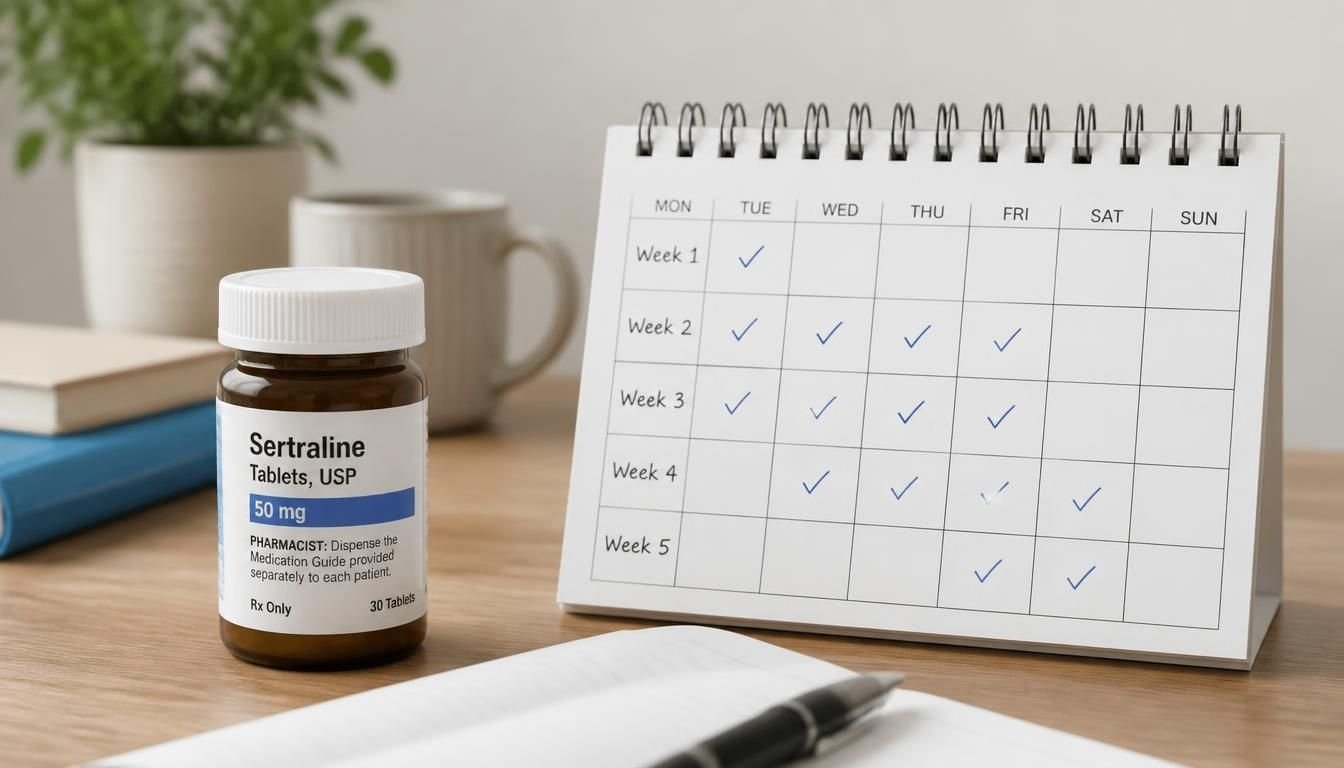
A simple symptom record can provide more useful information than judging the medication from day to day.
For example, once or twice a week you could record:
| What to track | Example |
|---|---|
| Anxiety intensity | 7 out of 10 |
| Panic symptoms | 3 episodes this week |
| Sleep | 6 hours per night |
| Avoidance | Avoided one social situation |
| Daily functioning | Completed normal work and errands |
| Side effects | Mild nausea in the morning |
After several weeks, these observations can help you and your clinician identify whether there is a meaningful trend.
The goal is not necessarily to eliminate every anxious feeling. A useful response may mean that anxiety becomes less severe, less frequent, or less disruptive to everyday life.
Expert Decision Support: When to Wait, When to Call, and When to Seek Urgent Help
The most important decision is not simply whether a certain number of weeks has passed. It is how your symptoms and side effects are changing.
If symptoms are gradually improving and side effects are manageable: continue following the prescribed treatment plan and discuss progress at your scheduled appointment.
If there is little improvement after an appropriate treatment period: speak with your prescriber rather than increasing the dose yourself. They can determine whether additional time, a dose adjustment, therapy, or another treatment approach makes sense.
If symptoms are becoming substantially worse: contact your healthcare professional promptly.
If you develop suicidal thoughts, thoughts of harming yourself, severe confusion, extreme agitation, or other potentially dangerous symptoms: seek urgent medical assistance rather than waiting for the medication to take effect.
This approach is safer than using a fixed timeline to decide whether to continue or change treatment.
Frequently Asked Questions
How long does sertraline take to work for anxiety?
Sertraline often takes several weeks to produce noticeable improvement in anxiety. Some people notice early changes within the first few weeks, while a fuller response can take around 6 to 8 weeks or longer.
Can sertraline work immediately for anxiety?
No. Sertraline is not generally considered a fast-acting anxiety medication. Its therapeutic effects develop gradually, so immediate relief should not be expected after the first dose.
Why do I feel more anxious after starting sertraline?
Temporary increases in anxiety, nervousness, restlessness, or sleep problems can occur after starting an SSRI. If the symptoms are severe, worsening, or difficult to manage, contact your prescriber.
Should I increase my sertraline dose if it is not working?
Do not increase the dose without medical advice. Your prescriber can determine whether the current dose is appropriate and whether enough time has passed to evaluate its effect.
What happens if sertraline does not work for my anxiety?
Your clinician may reassess the diagnosis, dose, treatment duration, side effects, therapy, other medications, or alternative treatments. One medication not working does not mean that anxiety cannot be treated successfully.
Can I stop sertraline when my anxiety improves?
Do not stop sertraline suddenly unless your healthcare professional specifically tells you to. A clinician can advise whether and how the medication should be reduced.